StandardX raises £10M seed to build a London isotope refinery
Two nuclear engineers are building a refinery for the isotopes cancer care and fusion cannot buy today. StandardX raised £10M from Vsquared, East X and firstminute to start in London.

Also see more funding coverage: /funding/
Founded 2025 · London, United Kingdom
StandardX, the London nuclear deeptech founded in 2025 by two fusion engineers, has raised a £10M seed round co-led by Vsquared Ventures and East X Ventures to build an accelerator-based refinery for the rare isotopes that cancer medicine and fusion power both depend on.
Fundraising for nuclear infrastructure is one of the hardest pitches in Europe – and yet this round came together around a supply problem so concrete you can weigh it in kilograms. Below, I lay out the round, the two founders behind it, and why the isotope shortage is quietly becoming one of the most investable constraints in deeptech.
Two co-leads and a supply chain nobody built
StandardX announced the £10M seed on 23 September 2026. Vsquared Ventures, the Munich deeptech fund, and East X Ventures, the London firm backing frontier science, co-led the round. firstminute capital, UKI2S (the UK Innovation and Science Seed Fund), Brevan Howard Macro Venture and Geometry all participated.
The money has three jobs, per the company’s announcement: grow the team beyond 15 scientists and engineers, secure a first industrial site in London, and advance the design and construction of the first accelerator-based isotope refinery system. First isotopes are due at a medical research partner in 2027, with industrial-scale production from 2029.
“Shortages are most acute in cancer medicine, already impacting patients today, and stalling progress in the development of next-generation treatments,” said CEO Richard Pearson in the announcement.
From Kyoto Fusioneering to a refinery in London
StandardX was founded a year ago by Dr Richard Pearson and Dr Ross Allen, both nuclear engineers with startups already behind them. Pearson co-founded Kyoto Fusioneering and wrote his PhD on fusion engineering and tritium supply; Allen is a nuclear physicist on his third startup, specialised in accelerator-driven isotope production, and the architect of the StandardX platform.
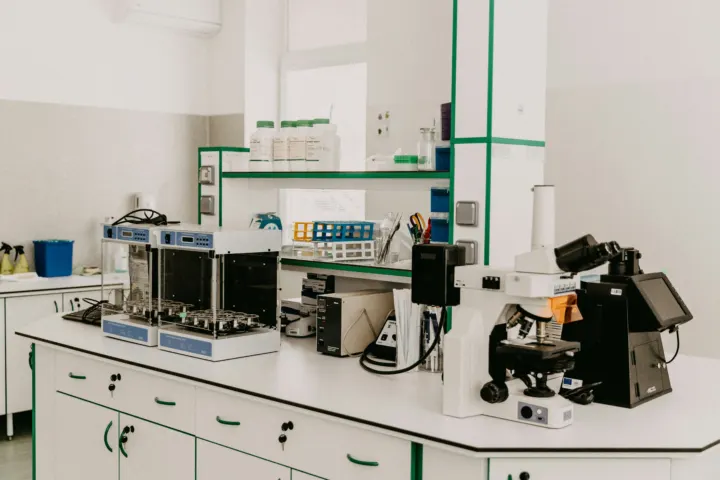
The product is best understood as a refinery rather than a reactor. Today, most rare isotopes come out of ageing research reactors and single-purpose facilities, each built for one product and none built for scale. StandardX’s accelerator-based system is designed to produce a whole portfolio of isotopes on a standard industrial footprint – which means production can sit close to the hospitals and fusion plants that need it, instead of crossing borders with a decaying half-life.
The team they are recruiting tells you how seriously to take the hardware ambition: staff have come from SpaceX, Fermilab, the UK Atomic Energy Authority, Oxford and Cambridge. The company says agreements are already signed with leading fusion developers for tritium manufacturing.
A $13bn market short of its raw material
The scarcity is not theoretical. Clinical trials for targeted alpha therapies – a promising class of cancer treatment – have been paused or delayed across the UK and Europe for want of isotopes, per the company’s announcement. On the energy side, the same announcement puts the world’s entire tritium inventory at about 25kg, while a single commercial fusion plant would need tens of kilograms a year. We are, quite literally, planning a fusion industry without its fuel.
The medical side alone is a sizeable market: nuclear medicine radioisotopes are worth USD 8.09bn in 2026 and projected to reach USD 13.12bn by 2031, a 10.17% CAGR (Mordor Intelligence, 2026). A seed-stage company will not capture that alone, but a 10% growth rate against flat supply is exactly the gap infrastructure gets funded into.
For scale, £10M sits at the ambitious end of European deeptech seeds: TUSK IC took €15M at Series A to bring satellite chips home to Antwerp, and London’s Basecamp Research just raised $140M at Series C for its biological foundation models. Seed rounds of this size in nuclear are still rare on this side of the Atlantic.
Fuel first, reactors later
So what does this round signal? That European investors have started funding the inputs of frontier technology, not just the headline machines. Fusion companies raise the big rounds; the tritium they will burn barely exists. Radiotherapy gets the medical headlines; the isotopes behind it are rationed. The good news is that the constraint itself is now the company – and a Munich deeptech specialist co-leading a London isotope play alongside East X reads like the supply chain organising itself before the demand arrives.
Watch two dates: 2027, when StandardX is due to ship its first isotopes to a medical research partner, and 2029, when industrial-scale production is meant to begin. Between them sits the difference between a thesis and a supply chain. You can follow every European round we track, this one included, on our fundraising data page.
Europe does not need to copy anyone’s playbook here: the reactors, the hospitals and now the refinery are all on our own map. Let’s keep the fuel coming.