Web Summit lost a day to Storm Charles. We built a side event in less than 24 hours
Also see more events coverage: /events/
At 8 pm on Tuesday, November 10, word spread in Lisbon that Web Summit wouldn’t open the next day. Portugal’s government had advised against opening the Parque das Nações venue, and the national weather service was forecasting gusts of up to 120 km/h from Storm Charles, according to The Next Web. Twenty hours later, Station Lisboa in Bairro Alto opened its doors for an event called “Fuck the Storm”. We had accepted 249 people for a room that held 130, and 150 came.
I was one of the five people who ran it, in charge of the guest list and the tech. Three things from that night apply to any organizer, side event or not: what gets people to commit fast, what gets a room talking, and how you build a guest list when there’s no time to build one.
Get the Weekly brief
The week’s rounds, last calls and events, every Monday.
Speed runs on trust in one person
When the news landed, I was at the New Media Mixer hosted by EUVC. A few of us moved on to a side event hosted by Flyer One Ventures, and that’s where Kayvan Nikjou decided the lost day deserved a non-conference and a party.
At that side event he met the owner of Station Lisboa, a venue in Bairro Alto that was free the next day and affordable. He booked it on the spot, then went through the list standing there. Is there a sound system? Can we play music? Can we run short talks, and what would the stage look like? Can Zivile record podcasts on site? I set up the Luma RSVP page while he was still asking. He made the logo and the event visual with an AI image tool.
Kayvan’s own timeline, posted after the event, gives the pace. By 10 pm the venue, the money, the name and the logo were in place. By 11 pm there was a plan, and at 1 am the venue was paid. The team group chat opened at 10 am on Wednesday, the venue was dressed by 2 pm, we held our one and only full huddle at 2:30 pm, and doors opened at 4 pm.
The jobs were split in one message. Stina (Bitrefill) took food and ambience. Mohannad El-Barachi took the bar. Nima Mirpourian took matchmaking and networking. Zivile Einikyte took hosting, podcast recordings and the run of the evening. Stefano Fallaha brought his network, Jamil Shinawi helped, and Kayvan kept the music and the invitations.
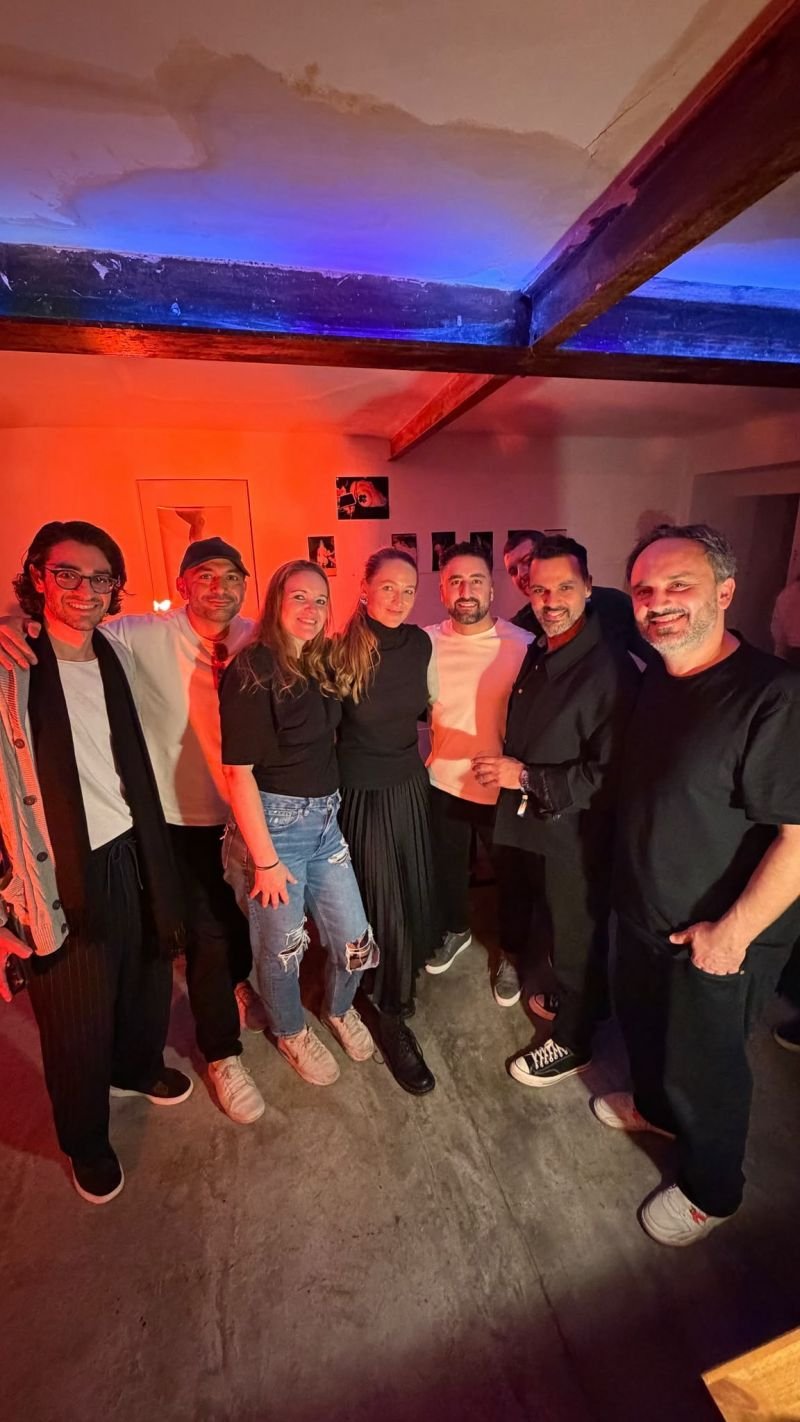
I’m not saying every event should be organized overnight. Most shouldn’t. But a venue owner, speakers and a team of busy founders all said yes to something with no name and no history, and five of us paid for it. They said yes to Kayvan. I’ve known him since 2014, and he decides first and sorts out the details second. On a 20-hour timeline, a reputation does the work a marketing plan normally does.
Drop the word everyone came to talk about
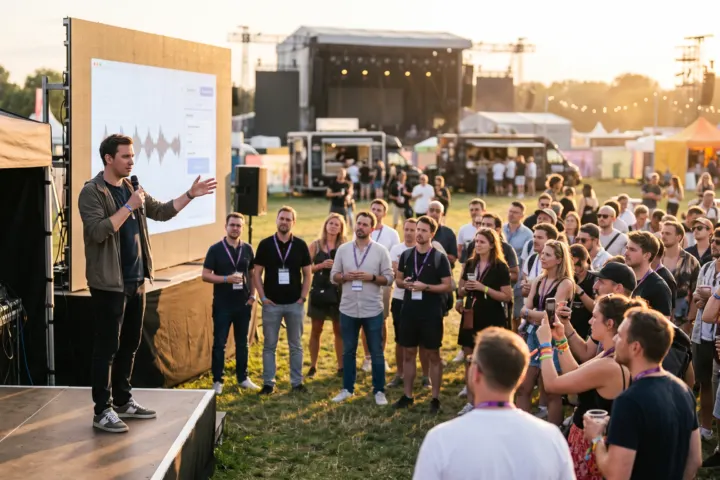
Guests arrived from 4 pm, and the talks only started at 7 pm. We kept the content to about one hour. Stefan Sierov opened with a handpan performance, and Zivile had met him 30 minutes earlier. Then came three sessions: Michelle Lee (IDEO) first, then Mike Reiner, then Mohannad El-Barachi and Jamil Shinawi.
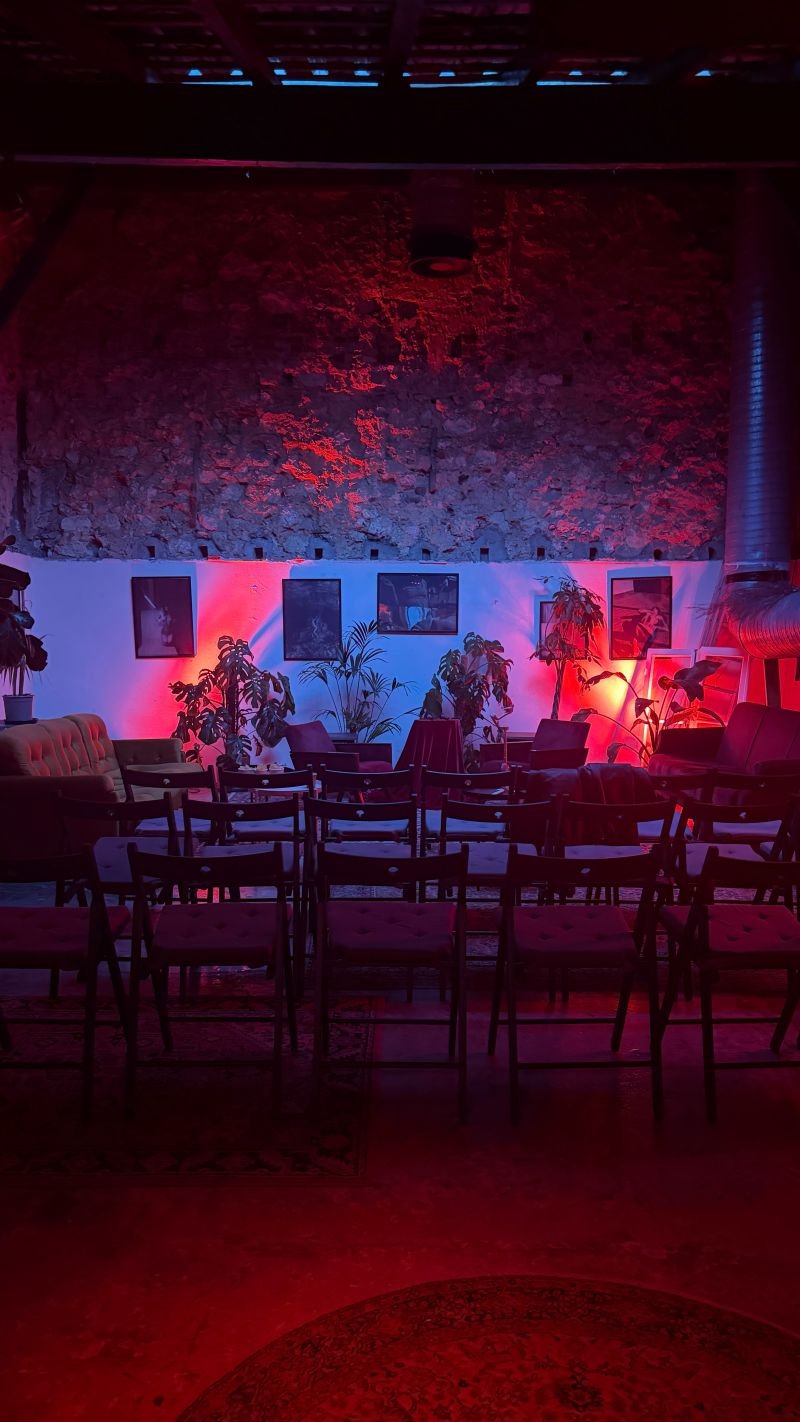
The red thread was the role of humans. On stage, we held ourselves to one rule: avoid “AI”, “agent” and “agentic”. The talks covered love, passion, compassion, playfulness and childhood, and what it means to build something that matters to you. Take those three words away from a tech audience in 2026 and speakers have to say what they think in their own vocabulary.
Michelle had flown in from IDEO to give a Web Summit talk called “Embracing Play in Uncertain Times”. The storm cancelled her slot and suspended flights out of Lisbon, which put her next talk, at Leading Design London, at risk too. She found us through two unmarked doors with keypad codes, and ended up speaking in Lisbon after all. In her LinkedIn post about the evening, she described “a warm community of people from around the world who saw disruption as an opportunity to create something different.”
The short program mattered as much as the rule. Three hours of open room before the first talk, and only one hour of content, left the evening for conversation. That’s what people lost when the venue at Parque das Nações closed. A side event will never compete with Web Summit on stages or speakers. It competes on the conversations you can’t have in a venue that held more than 60,000 people that week, by Lisbon mayor Carlos Moedas’ count.
The guest list is a referral graph
About 350 people asked for a place at an event that hadn’t existed the day before. We accepted 249 and turned down about 100, knowing the room held 130. The main filter was who had invited them. On the night, 150 came.
Nobody had time to research 350 profiles in an afternoon. A trusted name vouching for a guest was the fastest reliable signal we had. Kayvan put the bet plainly in his post: “carefully curated rooms are incalculable in value”. By the end of the night, 25 pizzas were gone and people were dancing at 10 pm.
This is the part I keep turning over. Software already handles some of it: Luma lets a host require approval and ask questions at registration. A tool could rank applicants by who referred them, spot duplicates or suggest who should meet whom. What it can’t judge yet is whether the person doing the referring has good judgment about people. On Wednesday, that judgment sat with five of us in a group chat.
Web Summit reopened on Thursday, November 12, and told attendees it would be its “busiest Thursday ever”, per The Next Web. Several sessions lost to the storm moved to that day.
So if you’re running a side event next year, ask who your first 20 guests would vouch for. Ask your speakers to drop the word every other stage is using. And ask yourself which part of your guest list you’d hand to software, and which part you’d still trust to the people who know the room.