André Loesekrug-Pietri - building Europe's ARPA
JEDI co-founder André Loesekrug-Pietri on running DARPA-style moonshots in Europe, from rare-earth refining to laser comms and antimicrobial resistance.

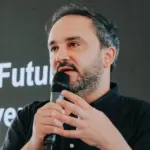
About this episode
What if Europe had its own DARPA? André Loesekrug-Pietri has spent the last few years building exactly that. He is the co-founder and managing director of JEDI, the Joint European Disruptive Initiative, a privately funded agency that runs DARPA-style moonshots on rare-earth refining, laser communication, antibiotics and more. Ahead of a fast-moving conversation on how JEDI picks its bets, who pays for them and why he thinks Europe keeps funding projects instead of winners, here is what we took away from the episode.
Show notes
From private equity to building Europe's ARPA
Loesekrug-Pietri moved through private equity, entrepreneurship and government, including a stint as special advisor to the French Minister of Defense, before co-founding JEDI in 2018. About 20 people set up the organization, split roughly into three groups: industrialists, heads of large research bodies such as Germany's DLR and France's CNRS, and deep tech founders. Among them, former astronaut and French research minister Claudie Haigneré suggested the name "JEDI", betting that Europe could lead the rebellion against its dependencies and shape the future rather than play fast follower. The founders deliberately built JEDI outside EU institutions, Loesekrug-Pietri said, to avoid getting bogged down in the bureaucracy of the European Commission or member state ministries.
A DARPA model built around calculated big bets, program managers and clear priorities
JEDI borrows its structure from the US Defense Advanced Research Projects Agency, which Loesekrug-Pietri credits with pioneering GPS, stealth technology and autonomous vehicles in the wake of the "Sputnik shock". For JEDI, everything is dual use. The fact that DARPA was born inside the Department of Defense matters too: defense ministries plan budgets over long cycles and are obsessed with preventing strategic surprise, two concerns that sit at the heart of JEDI's mission. Each JEDI moonshot sets one quantitative goal and puts a single program manager in charge, rather than a scientific committee, to make calculated bets across disciplines. Loesekrug-Pietri contrasted this with France's 40-billion-euro France 2030 program, which has funded 7,500 projects, many of them interesting, without yet producing a single world-leading company. JEDI's own network spans more than 8,000 technology and science leaders across 30 countries and 43 hubs, the largest deeptech network in Europe.
Support from philanthropies, over 150 CEOs, and three EU states
JEDI's funding comes from three sources. It started with two philanthropic donors, a family foundation in Germany and an insurance-linked philanthropy in France, both worried about Europe's industrial future. More than 150 CEOs of large industrial groups and startups now back JEDI, including Siemens Energy, Schaeffler and Fives. In return they get access to that deeptech network, technology foresight across 40 topics and a say in shaping the moonshot programs JEDI launches. JEDI also has direct backing from three EU member states, which see flagship programs, such as one on robotics in an Eastern European country and one on quantum sensing in a Scandinavian country, as tools for their own competitiveness, an accelerator for their ecosystem and a lighthouse for their attractiveness.
11 active Moonshot programmes (rare earths, lasers, antibiotics…)
One active JEDI program targets refining critical minerals with 10 to 100 times less environmental impact, to cut Europe's reliance on China, which Loesekrug-Pietri said now refines 90 percent of the world's permanent magnets, the ones found in electric motors, missile guidance systems and offshore wind turbines. A second program is developing all-weather laser communication: low earth orbit satellites currently have only a nine-minute window to downlink data, and clouds block laser links. The same technology could force down drones for about 2 euros per shot instead of firing million-dollar missiles. A third program targets antimicrobial resistance, which could kill up to 10 million people by 2050, after 20 years without a major discovery.
How the money flows, and what's ahead: the JEDI methodology
Programs typically start with 50 to 150 teams that JEDI invites from across Europe, from industry, startups and academia. It then funds three to seven of them in parallel for nine to 18 months, paying half the grant upfront and the rest only if a team hits the goal with a working prototype. Teams keep their IP, and JEDI steps back once a prototype is ready to attract seed or venture funding. JEDI's formal organization is under three years old, Loesekrug-Pietri said, with one program completed, a Covid treatment effort that produced 26 candidate molecules, two more in evaluation and nine additional active programs.
Be sure to follow Sesamers on Instagram, LinkedIn, and X for more cool stories from the people we catch during the best Tech events!