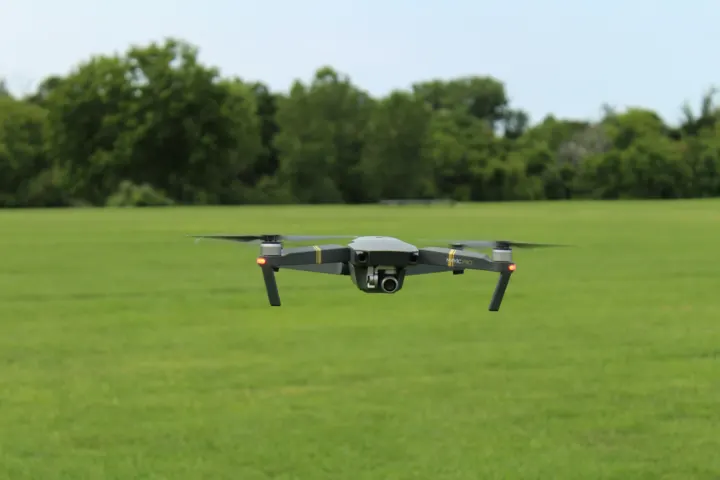
CMR Surgical raises $400M from Stryker, with a buyout option
Stryker takes preferred equity, exclusive US sales rights to Versius and an option to buy 100% of CMR Surgical - US scale capital arriving for a Cambridge-built robot with 50,000 operations behind it.

Also see more funding coverage: /funding/
Founded 2014 · Cambridge, United Kingdom
Cambridge-based CMR Surgical has taken an approximately $400M (£300M) preferred equity investment from US medtech group Stryker, which becomes the exclusive US sales agent for the Versius surgical robot and holds an option to buy the company outright.
Europe can build world-class surgical robots; keeping them European through the growth stage is the harder operation. And yet this deal, announced on 12 October 2026, lands two-thirds the size of CMR’s record 2021 round from a single investor, while leaving the company independent today. Below, I lay out the terms, the company behind them, and what this alliance signals for European medtech.
A $400M cheque with an option attached
Stryker (NYSE: SYK) is making a preferred equity investment of approximately $400M (£300M) in CMR Surgical, per the companies’ joint announcement of 12 October 2026. This is a strategic alliance, not an acquisition – for now. Stryker takes an exclusive option to acquire 100% of CMR’s outstanding equity in the future, becomes the exclusive US sales agent for the Versius portfolio, and places Andy Pierce, its Group President for MedSurg and Neurotechnology, on CMR’s board.
CMR keeps leading product development and commercialisation in every market outside the US, with R&D staying in Cambridge and manufacturing at its Ely facility. The investment is subject to regulatory approvals and customary closing conditions.
CEO Massimiliano Colella called the alliance “a strong endorsement of the technology, clinical experience and global business”, saying the capital will help CMR accelerate innovation and expand the Versius portfolio globally. Pierce described soft-tissue robotics as “a high-growth adjacency and a natural extension of Stryker’s strengths”.
Twelve years from Cambridge prototype to 50,000 operations
Founded in 2014, CMR Surgical builds Versius, a modular soft-tissue surgical robot designed to slot into existing operating theatres rather than demand a purpose-built suite. The company says Versius has now been used in more than 50,000 operations across more than 35 countries, works with more than 20 NHS trusts, and is the second most widely used soft-tissue surgical robot in the world (company figures, October 2026).
The US is the newest front. Versius received FDA marketing authorisation for gallbladder removal in October 2024 – the first multiport soft-tissue general surgical robot through the agency’s de novo pathway – and CMR raised more than $200M in equity and debt in April 2025, per the company, to fund the US launch and the upgraded Versius Plus.
Big numbers are not new here. The company’s $600M Series D in June 2021, led by SoftBank Vision Fund 2 with Ally Bridge Group, was one of the largest private medtech financings on record at the time. Cambridge Innovation Capital, CMR’s first institutional investor, has backed every round since the prototype stage and calls this week’s deal “a UK manufacturing and technology success story”.
What second place in surgical robotics is worth
The global surgical robots market stood at $14.1bn in 2025 and is forecast to reach $45.6bn by 2033, a 14.9% CAGR (Grand View Research, 2026). Soft tissue is the segment Intuitive Surgical’s da Vinci has owned for two decades; being the clear number two there is exactly what makes CMR worth a $400M option to the dominant player in orthopaedics.
For scale against our own records: the largest European medtech and health rounds we covered in the past week were Sava’s $36M Series B for its glucose microsensor and Scarlet’s $50M Series B for AI medical device certification. Stryker’s single cheque is more than four times the two combined – growth capital at a size European investors still rarely write for hardware.
When the buyout option moves to Michigan
So what do we make of a Cambridge champion whose most likely future owner now sits in Kalamazoo? The reality is familiar: after the Series D, a further raise in 2023 and the 2025 equity-and-debt package, the capital able to carry a European surgical robotics company through a US launch arrived with a US logo on it. Our fundraising data is full of European deep tech that raises brilliantly to Series B and then goes quiet at exactly this stage.
The good news is what this structure preserves. CMR stays independent today, R&D stays in Cambridge, production stays in Ely, and the option is priced on what the company built at home – 50,000 operations is not a promise, it is an installed base. We have watched the investment-with-option pattern for years in pharma; seeing it arrive in surgical robotics at this size tells us US strategics now treat European medtech as a pipeline rather than a curiosity.
What to watch: whether and when Stryker exercises its option, and how fast Versius spreads through US hospitals with Stryker’s sales organisation carrying it. Europe’s job is not to resent the cheque; it is to build enough companies like this one that the options get expensive. Let’s build them!