IFA 2026: the twenty startups who pitched, and the one who won
Also see more events coverage: /events/
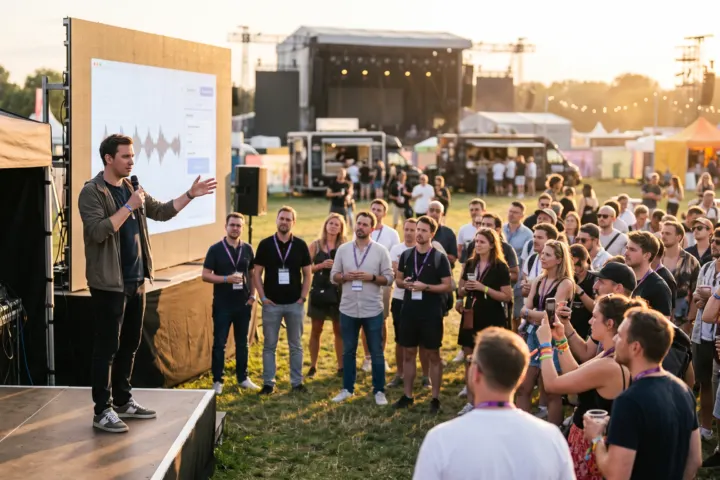
A company that prints implantable human tissue won a pitch competition at a consumer electronics fair. Cellbricks Therapeutics took the IFA Pitch Battle 2026 on the Dream Stage on September 6, in a hall where the neighboring feature was a catwalk for humanoid robots. Berlin deeptech, on a stage built for appliances.
IFA Next is the startup area of IFA Berlin, the show floor where early-stage companies, research spin-offs and university labs exhibit alongside the consumer electronics majors, and it runs its own pitch competition during the show. Here are the twenty semi-finalists who pitched there over September 4 and 5, the six who reached the finale, and what their scorecard says about where European hardware startups stand right now.
The pitch battle ran in front of the biggest IFA crowd yet
The IFA 2026 report, published September 8, 2026, puts the edition at roughly 240,000 attendees from 155 countries, up 9 percent on 220,000 in 2025, with over 2,000 exhibitors from 51 countries across 190,000 square meters. Media attendance reached 5,200-plus, up 18 percent, including 3,000-plus press and 1,500-plus creators.
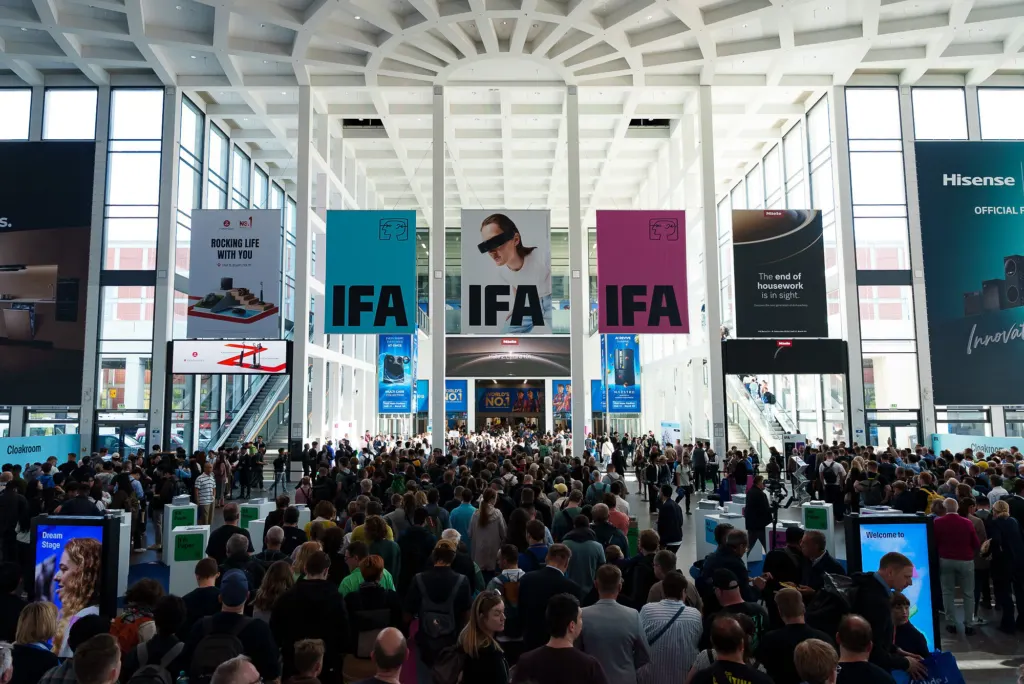
IFA Next itself hosted around 300 startups from 24 countries, 15 percent more companies than the 260 it counted in 2025. IFA describes the area as a launchpad where startups, pioneers and researchers meet, and in practice it is where the show puts its earliest-stage exhibitors, its national innovation delegations and its stage program for founders. Leif Lindner, CEO of IFA Management GmbH, called the edition “bigger and more international than ever before” in IFA’s closing release.
That’s the room the twenty pitching founders walked into. Full disclosure before we get to them: IFA Management is a Sesamers client.
They pitched into a show where AI and robots were the backdrop
AI was on almost every stand this year, and in almost every appliance. AMD opened the show with a new Ryzen AI chip built to run large models directly on the device. LG filled Hall 18 with an AI Home Zone and put ThinQ Claw, a conversational agent, at the center of it.
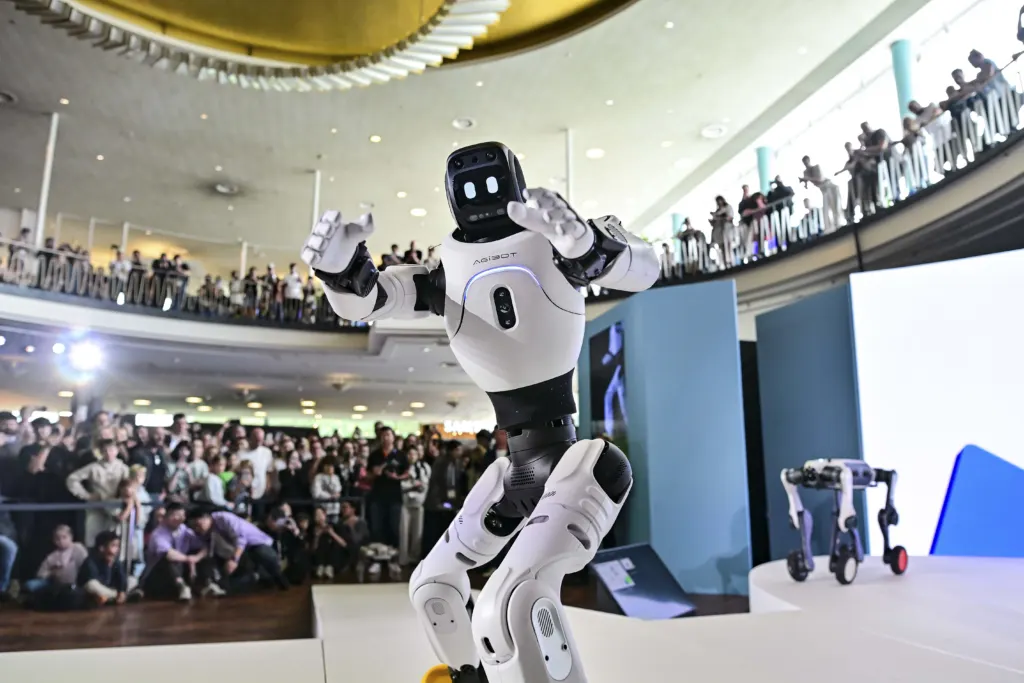
Robots were the other headline. On September 5 IFA sent Unitree, EngineAI, DEEP Robotics, AGIBOT and Dobot down a runway on the Creator Stage, in a feature its own highlights recap calls Robots on the Runway. David Reger (Neura Robotics) took the Innovation Stage to talk cognitive machines, weeks after closing a Series C of up to $1.4 billion, which Tech Times describes as the largest round ever raised by a full-stack robotics company. Across IFA Next, humanoids and exoskeletons were everywhere.
Call it the year of the humanoid robot. Then look at what actually won the pitch battle.
Twenty semi-finalists, ten per day
September 4, in pitching order:
- Prolo Ring, USA. Wearable gesture controller for mouse, scroll and shortcuts.
- Optiqb, Singapore. Optical screen protector plus a 3D engine for naked-eye 3D on mobile.
- Cellbricks Therapeutics, Germany. Tissue therapeutics to restore lost organ function.
- Grovero, Netherlands. Countertop microfarms for professional kitchens.
- HaptonTech, Netherlands. Haptic screens and wearables built on liquid crystal materials.
- INMO, Hong Kong. Wireless AR glasses.
- Eatingpapers, Germany. BIPO, a screen-free voice robot companion for kids aged 3 to 15.
- LeydenJar, Netherlands. Pure silicon anodes for higher lithium-ion energy density.
- MoliEye, China. AI assistant turning slides into speech scripts.
- Alpenglow Tek, Taiwan. Ultra-low-power AI inference chips and custom silicon for edge devices.
September 5, in pitching order:
- Janus Cyber, Taiwan. Zero-trust IoT security, spun out of ITRI in 2025.
- Studki, Germany. AI learning app for school years 3 to 12.
- TRAKKER, Germany. Real-world visitor behavior turned into live event analytics.
- Turing Space, Netherlands. Trusted credential infrastructure, run from The Hague.
- Benario XR, Germany. Curved convex lithography to make advanced optics manufacturable.
- Next Integral, Taiwan. Edge AI inspection for food and beverage packaging.
- VMFi, Japan. Offline real-time speech translation for service counters and stages.
- All The Time, Korea. THE GUIDE, an AI personal safety platform.
- DeCloak, Taiwan. Privacy computing with differential privacy and searchable encryption.
- Neuronova, Italy. Neuromorphic chips running always-on AI on under a microwatt, spun out of PoliHub at Politecnico di Milano.
Ten of the twenty are European: four from the Netherlands, five from Germany, one from Italy. Nine come from Asia, with Taiwan sending four. One is North American.
Six finalists, and three of them German
The September 6 finale on the Dream Stage brought back six: HaptonTech, Eatingpapers, Cellbricks Therapeutics, VMFi, TRAKKER and Neuronova.
The competition runs in partnership with the Startup-Verband, the German Startup Association. The association handles the jury, the moderation and the selection process, and the format now takes entries from companies that don’t exhibit at IFA at all. Christoph J. Stresing, the association’s CEO, called IFA “the meeting point for innovators, thought leaders, and consumers worldwide” when the cooperation was announced.
Five judges decided the final winner: Jackie Kroyer (NAP), Alan Poensgen (Antler), Roman Pimonov (IBB Ventures), Isabel Eberhardt (b2venture) and Sven Geißler, who runs the AI Lab at Roland Berger.
Five of the six finalists are European: three German, one Dutch, one Italian. Only VMFi, the Tokyo-headquartered speech translation company founded in Taiwan in 2020, carried Asia into the final round.
Look at what those six build. Liquid crystal haptics. A voice robot companion for children. Printed human tissue. Offline speech translation. Event analytics from real-world visitor behavior. A neuromorphic chip that runs always-on AI on under a microwatt. In the year of the humanoid, the only robot in the final six was a talking companion for kids.
Cellbricks won with the least consumer product on the stage
Cellbricks Therapeutics builds tissue therapeutics on deeptech foundations, with the goal of restoring lost tissue and organ function at scale. Alexander Leutner took the win for the team. It is a Berlin company solving a clinical problem, and it won a pitch battle in a building full of televisions and vacuum cleaners.
I read that as a signal about what a jury rewards when the floor outside is saturated. When 2,000 exhibitors are all showing AI, the pitch that stands out is the one solving a problem nobody else in the hall is near. Depth beat category fit.
Ten out of twenty.
Deeptech travels better than gadgets at IFA Next
Put the six finalists side by side and a pattern shows up. Printed human tissue. A neuromorphic chip. Liquid crystal haptics. Offline speech translation. These are companies with labs, patents and multi-year roadmaps, in a building organized around seasonal product launches. The jury went for the hard stuff.
That’s useful information if you build hardware in Europe. Four of the six finalists have a core technology as their main asset, and all four reached the finale in a hall full of finished consumer products.
The semi-final list carries the same signal. LeydenJar spun out of the Dutch research organization TNO and sells Silyte, a pure silicon anode for lithium-ion batteries. Writing for Tech.eu on September 7, 2026, Cate Lawrence reports that Silyte anodes carry 50 percent higher energy density than graphite, run up to ten times thinner, and cut the CO2 footprint of anode production by 85 percent. LeydenJar has raised over €100 million and expects its first commercial production facility in early 2027.
The pitch battle runs alongside the IFA Innovation Awards, a separate program that drew over 530 submissions in 2026. One of its categories carries the name Best in IFA Next and Emerging Technologies. In the same Tech.eu piece, Lawrence notes that of the 10 winners and 20 honorees in that category, “none appear to be of European origin, to the best of my knowledge”, and that “Asian startups occupy noticeably more floor space than their European counterparts”. Her read is that fewer European startups exhibit at IFA at all, with some putting their budget into CES in Las Vegas.
So two programs, two different outcomes. Five of the six pitch battle finalists were European. In the awards category named for emerging technologies, Lawrence found no European winners at all.
IFA has already dated the next edition in that same report: Media Days on September 1 and 2, 2027, then the show itself from September 3 to 7 at Messe Berlin. If you build something with a lab behind it, that was the room where it won this year. Put it in the calendar.
Disclosure: IFA Management is a Sesamers client. Sesamers sells startup acquisition and curation services to event organizers.