Qluster raises €4.7M pre-seed to build photonic quantum computers
Paris-based Qluster raised a €4.7M pre-seed led by Quantonation, with Quantum Launchpad and Bpifrance, to build room-temperature photonic quantum computers out of the Kastler Brossel lab.

Also see more funding coverage: /funding/
Founded 2026 · Paris, France
Qluster, a Paris startup building room-temperature photonic quantum computers, has raised a €4.7M pre-seed round led by Quantonation, with Quantum Launchpad and Bpifrance also in the round.
A first round from a quantum specialist
Qluster announced the round on November 17, 2026. It is the company’s first funding, and Quantonation, the fund focused on quantum technologies and physics-based innovation, wrote the lead check. Quantum Launchpad and Bpifrance joined, and Agoranov has supported the team since its inception.
Get the Weekly brief
The week’s rounds, last calls and events, every Monday.
The money goes into an in-house R&D laboratory to improve the performance of Qluster’s photonic technology, and into hiring experimental physicists and specialists in quantum computing theory and architecture. Hardware components and machine architecture will advance in parallel, according to the company’s press release as published by The Quantum Insider.
Four founders and a patented light source from the Kastler Brossel lab
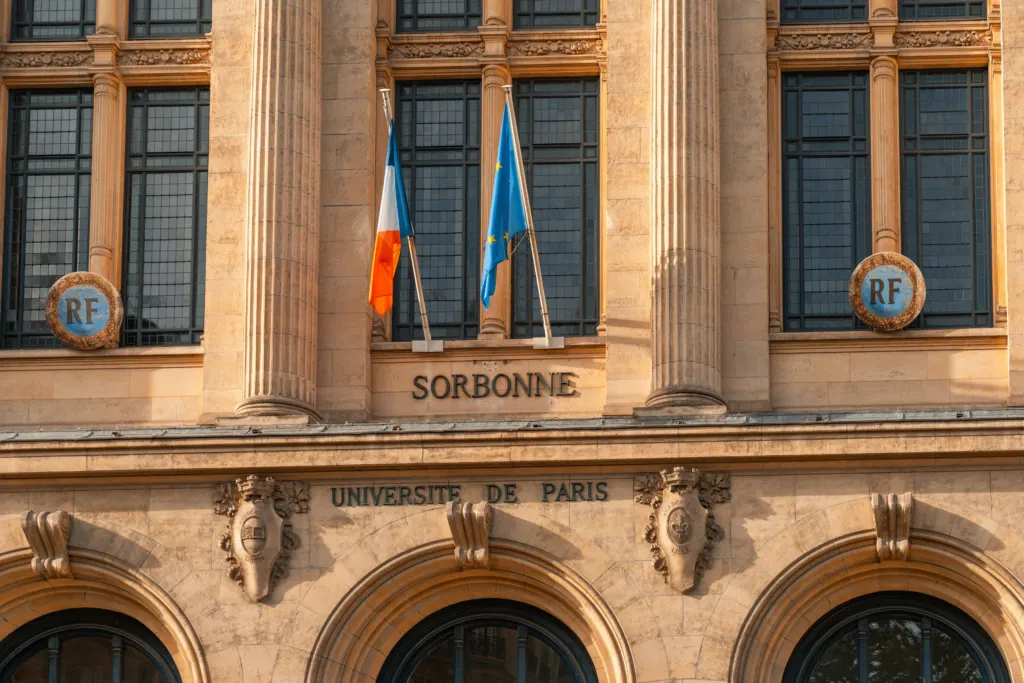
Qluster spun out of the Laboratoire Kastler Brossel, a Paris lab linked to Sorbonne Université, CNRS, the École normale supérieure and the Collège de France. The team was founded a few months before the announcement, with Sorbonne Université and the Île-de-France region financing a first technology-transfer phase, as Sorbonne reported in June 2026. The company has since won the 2026 i-Lab Grand Prize under France 2030.
Four people lead it. David Fainsin is CEO and Ambroise Boyer is CTO, both with PhDs in quantum optics. Clarisse Thibault is COO and previously worked at CNRS Innovation. Valentina Parigi is CSO, a physicist and Sorbonne University professor who chairs the scientific advisory board. See the full Qluster profile for the company record.
The technology rests on a patented miniature multimode squeezed-light source that Parigi and Fainsin developed at the lab. Qluster uses it to generate continuous-variable cluster states, which encode information in the continuous properties of light and run at room temperature. That removes cryogenic infrastructure from the design and eases integration into data centers, according to Quantum Computing Report.
The company calls its method “Architecture First”: it starts from target industrial problems and sizes the machine from there. “The challenge today is to ensure that the computing architecture can meet the needs of industry,” said Fainsin. The roadmap targets an intermediate-scale machine by 2032 and a large-scale, fault-tolerant universal quantum computer by 2036.
A billion-dollar market with a steep ramp
Quantum computing companies generated more than $1 billion in revenue worldwide in 2025, and McKinsey’s Quantum Technology Monitor 2026 (April 28, 2026) sees as much as $4.4 billion by 2028. The same report puts quantum computing at $43 billion to $71 billion by 2035, inside a total quantum technology market of $60 billion to $100 billion. The report gives no CAGR. Our own arithmetic on its 2025 and 2028 figures gives roughly 64% a year, which is our calculation and carries no weight as a McKinsey forecast. Startup investment in quantum reached $12.6 billion in 2025, 6.3 times the 2024 level, with about 90% going to quantum computing.
Two rounds in our own records give the €4.7M some scale. Quint Computing raised €9.1M on November 3 in a round led by Vsquared Ventures, with Quantonation among the investors. Coherence Quantum raised €2.78M in a seed round led by Lifeline Ventures on October 20. Qluster sits between the two, with a first machine still six years out. The check pays for a lab and a team of physicists.
What a specialist fund sees in a room-temperature bet
The reality is that fault tolerance, by Qluster’s own roadmap, needs thousands of logical qubits and billions of operations, and the company places that machine in 2036. The silver lining is how much of the scaffolding is already standing in France. A lab spinout here can stack an i-Lab prize, France 2030 backing, Bpifrance, an incubator like Agoranov and a specialist fund that also sits in the Quint Computing round. Quantonation’s Ylan Tran put the stakes plainly: “Scalability is currently the central challenge in quantum computing.”
That is the pattern worth watching. Since October 20, our records show a €2.78M quantum control seed, a €9.1M error-correction round and now a €4.7M photonic pre-seed, each a different bet on the same hardware problem. The good news for a company like Qluster is that the next two milestones are visible from outside: the first results from the new laboratory, and the first industrial partner named against a specific problem.
The opportunity is a photonic route that arrives with room-temperature operation and data-center integration designed in from day one. Follow the funding data to see where the next quantum rounds land. Let’s build on it!