Music startups and their buyers go to different conferences
Also see more events coverage: /events/
Music Innovation Consulting (MIC) keeps an agenda of 96 music and tech events for 2026. Fifteen carry its music-tech label, and eight of those are in-person events in Europe. Only one of the eight, Music Frontiers in Hamburg, belongs to the Federation of Music Conferences, the 33-member network where labels, promoters and export offices meet new artists.
The federation launched at ESNS in Groningen in January 2023. Its six founders were ESNS, Reeperbahn Festival, MaMA, Linecheck, Tallinn Music Week and the East European Music Conference. It brings music industry conferences together to share know-how and speak for them, including in a dialogue with the European Commission under its Music Moves Europe initiative. Most members pair a professional conference with a festival where new artists play for labels, agents and promoters. The federation grew out of these showcase festivals, and startups were never its core audience.
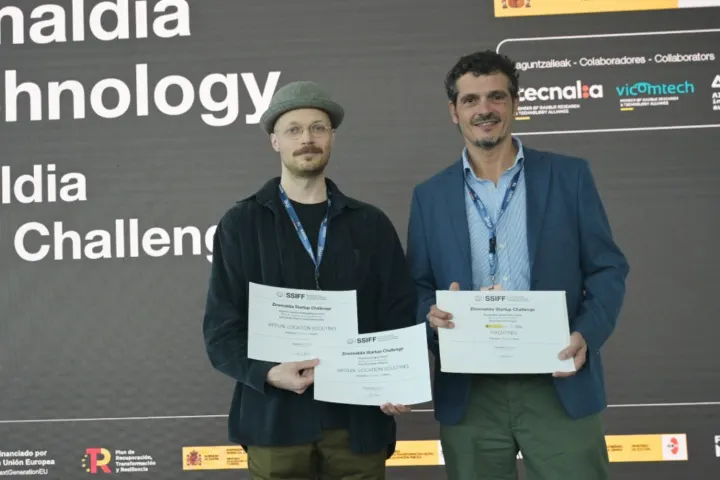
Last month I wrote about the Zinemaldia Startup Challenge, where the San Sebastián film festival put €43,000 of prizes in front of 68 creative-tech applicants, in the building where film buyers meet. I went through the 2025 and 2026 programs of all 33 FOMC members to see which ones do the same for music. Six run a dedicated startup program, seven have something partial, and 20 have nothing I could find. Below: the music-tech circuit, the six showcase festivals that open a stage to startups, and who pays for those stages.
Music-tech founders have their own circuit
These are the eight in-person music-tech events in Europe on MIC’s 2026 agenda:
Boom, Belgium. The Future of Live Tickets.
Umag, Croatia.
London, UK.
Barcelona, Spain.
Hamburg, Germany, during Reeperbahn Festival week.
Barcelona, Spain.
Helsinki, Finland.
Barcelona, Spain.
MIC also flags startup tracks inside larger shows, such as ADE Startups at Amsterdam Dance Event in October, and curates the music-tech track at MIDEM in Cannes. Music Tech Europe, the umbrella of 12 national music-tech associations, plans to publish its own conference list on a new website.
These events put founders in a room with other founders, investors and technologists. Many of the buyers of music-tech products, labels, festival promoters, venues, publishers and export offices, meet somewhere else: at the showcase festivals.
Startup stages follow delegate counts
Three of the six dedicated programs sit at the largest trade gatherings in the federation. MaMA Music & Convention in Paris counted 6,822 professionals from 68 nationalities in 2025. Its MaMA Invent strand runs a startup village, workshops and demo pitches over two days at the Trianon, and the MaMA Invent RIFFX prize gives the year’s best music innovation project a year of support.
Reeperbahn Festival had about 6,000 trade delegates from more than 40 countries in 2025, according to Hamburg Business. Its contest, The Sound of Solutions, puts eight startups on stage for five-minute pitches to a jury that includes Amplitude Ventures and Believe. The winner takes more than €15,000 in prizes in kind, including six months of coworking at SPACE Hamburg and a wildcard for the Wavelab incubator. MusicTech Germany, Wavelab and Music WorX run it, and Reeperbahn has hosted a startup contest since 2013.
BIME in Bilbao reported more than 4,000 professionals in 2024. BIME Startup pairs a startup village with a competition judged by investors and executives, run with the venture builder Eywa Space. Close to 200 startups have taken part, and the 2024 competition was the fifteenth, according to El Referente. The Bogotá edition added a 20-startup training track with the Bogotá Chamber of Commerce in 2025.
A conference with 6,000 delegates can sell a startup village to a bank, recruit a jury of investors and fill the room for the pitches, which a conference of 400 delegates can rarely do.
Dedicated startup programs sit at the larger conferences
Professional attendance at eight FOMC members, latest published figure. Highlighted bars run a dedicated startup program.
The other three run on association work and EU projects
Linecheck in Milan hosts the kick-off of the Music Tech Europe Academy every November. The academy is an equity-free, seven-month program for 10 startups per cohort, and it closes at Sónar+D in Barcelona. Music Innovation Hub, the company behind Linecheck, coordinates it with Media Deals, Technoport, MESO Events and Barcelona Music Tech Hub, on a €1.2 million budget for 2023 to 2026 co-funded by Creative Europe. Startups selected in 2025 paid a €500 fee.
Tallinn Music Week hosted the final pitch of TechTrack on 4 April 2025. Music Estonia calls it the country’s first music-tech program. Six finalists pitched and three won: EarLick, Synchub and BitLab, according to TechTrack. There was no cash prize. The winners got incubation at Tallinn Business Incubator, a paid trip to the Wallifornia MusicTech Summit in Liège, a Berlin visit with MusicTech Germany and a slot at Music Frontiers. TechTrack is funded through MI-RAP, an Interreg Baltic Sea Region project running from November 2023 to October 2026.
Music Frontiers is MusicTech Germany’s own conference. Startups and researchers demo tools on its Innovation Showcase Stage, and its 2026 edition moved from Berlin to Hamburg, inside Reeperbahn Festival week.
The TechTrack prize list is the part I’d copy. A pitch in Tallinn opened doors in Liège and Berlin, and the travel came out of a project budget. Four of the federation’s six founding members (Linecheck, MaMA, Reeperbahn and Tallinn Music Week) run one of these six programs. The 27 conferences that joined later account for two: BIME and Music Frontiers.
Twenty members have no startup line at all
Seven members have something partial:
- Africa Rising Music Conference (Johannesburg) opened a Demo Lab in 2025 for music-tech and gear brands.
- Athens Music Week ran a “Business Model Design for Music Startups” workshop and a creative hackathon in 2025.
- Classical:NEXT gives an Innovation Award to projects; the 2026 winners were SOAVE, Borealis and Playing With Fire.
- ESNS has no startup track in its main program. A side event with the University of Groningen, Energy, Tech & Tunes, hosted startup pitches in 2024.
- Most Wanted: Music (Berlin) runs a NextTech strand and a Hybrid Music Lab, with no pitch format.
- PIN Conference (Skopje) hosted the 2024 closing meeting of HEMI, a Creative Europe project with its own incubator.
- Riga Music Week ran next to SINTĒZE, an exhibition of production hardware and software, in 2025.
The 20 others are often small by design. Fira B! in Palma counted 345 accredited professionals from 18 countries at its tenth edition. PIN had 483 delegates in 2024. Riga Music Week received more than 400 artist applications from 38 countries for its first edition in 2025. In those rooms, a founder from Zagreb, Skopje or Riga meets labels, promoters and export offices from a dozen countries in two days.
I’m not arguing that every showcase festival needs a pitch stage. They were built to launch artists, and M4Music’s Demotape Clinic or the European Jazz Conference, with 391 delegates from 38 countries, do that job without startups. But a founder selling ticketing, rights data or fan tools to festival promoters has no slot at most of the conferences where those promoters meet.
Music-tech investors stay close to home
Music Technology UK’s Sound Investments 2026 report counted £68.8 million invested in UK music-tech companies in 2025, 51 percent below the 2021 peak of £183 million. Seed funding rose from £8.4 million to £22.1 million over the period, while growth-stage funding fell 90 percent. Two thirds of deals involved UK-only investors.
No equivalent count exists for the EU. Music Tech Europe, the umbrella of 12 national music-tech associations, lists ecosystem studies in its mission and has published none I could find. At Tallinn Music Week in 2024, Jevgeni Kabanov (Bolt) said there are “very few investors who truly understand the space”.
If investors are few and invest at home, founders outside Paris, Hamburg and Milan need to reach buyers in other countries early. The smaller FOMC conferences bring those buyers to Palma, Riga and Šibenik every year.
Brussels already has the line item to fund it
Creative Europe put more than €140 million into music between 2021 and 2025, 26 percent of its Culture strand, according to the European Commission. The 2027 work program, worth €402 million, adds a Music Moves Europe call on technological innovation, including digital and AI tools, as reported by European Express. The call amount isn’t published yet.
The Commission’s proposed successor program, AgoraEU, would run from 2028 to 2034 with €8.6 billion in total and €1.8 billion for culture. In February 2026, 23 organizations including Music Tech Europe, ESNS and IMPALA asked for an earmarked music budget inside it.
With a slice of the 2027 call, I’d fund a startup slot that travels across the smaller FOMC members, run by the music-tech association in each region. A jury at each stop, and winners carried to the next conference and to the larger stages in Paris, Hamburg, Bilbao and Milan. That’s TechTrack’s model at European scale. The federation already talks to the Commission through its structured dialogue, which six conferences led by ESNS run from 2023 to 2026. The associations already run juries. The 2027 call has no amount yet. Will any of it reach a conference of 400 delegates in Skopje or Palma?