CarbonFarm raises €7M Series A to cut methane from rice
An oversubscribed €7M Series A led by Colam Impact takes CarbonFarm's satellite MRV for low-methane rice from 19 countries into Latin America, with Proparco and Bpifrance aboard.

Also see more funding coverage: /funding/
Founded 2021 · Paris, France
Paris-based CarbonFarm has raised an oversubscribed €7M Series A led by Colam Impact, joined by Proparco, Suma Capital, elea, Working Capital Fund, Albo and Bpifrance, to scale satellite-verified low-methane rice farming across 19 countries.
Europe grows barely any rice, and the voluntary carbon market has spent three years under an integrity cloud – and yet one of the most convincing climate rounds of the week comes from a Paris team measuring paddy fields from orbit. The round was announced on 13 October 2026.
An oversubscribed €7M round with impact capital front to back
The Series A is €7M, CarbonFarm’s first priced round since its €2.5M seed in October 2023, and the company says it was oversubscribed. Colam Impact leads – the impact investment arm of Colam Entreprendre, the holding company of the family behind Sonepar. Around it sits an unusually institutional table for a round this size: development finance institution Proparco, Suma Capital, elea, Working Capital Fund, Albo and Bpifrance.
Existing backers renewed too: Serena and makesense, through their joint vehicle Racine², and Techmind both return from the seed. The new money goes where the rice is – strengthening operations across Asia, Africa and Europe, accelerating the push into Latin America, and deepening the technology and project-development capability that takes a field from measurement to certified credit.
“CarbonFarm is building the enabling infrastructure for one of the largest untapped decarbonisation opportunities globally,” said Benjamine Friderich, investment director at Colam Impact, in the announcement.
Satellites over paddy fields
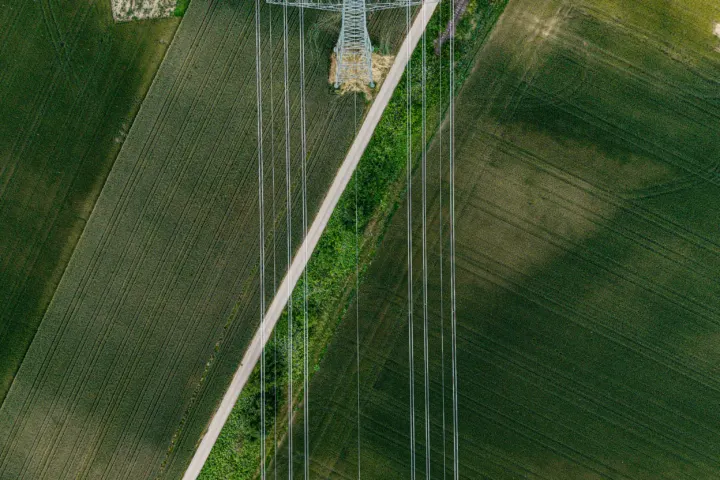
Founded in 2021 by Vassily Carantino and James Hastwell, CarbonFarm is a digital MRV provider – monitoring, reporting and verification – for rice decarbonisation. Its stack combines AI-driven satellite imagery analysis, field-data collection tools and greenhouse-gas modelling to quantify emissions field by field, built with research partners including Cornell University, INRAE and the European Space Agency. The company operates in 19 countries and works through local value-chain players – mills, cooperatives, NGOs, project developers – rather than signing up farmers one by one.
The crop deserves the attention. Rice accounts for roughly 12% of human-caused methane emissions and up to 28% of the world’s freshwater use, per the figures CarbonFarm cites in its announcement; switching from permanent flooding to alternate wetting and drying can cut those emissions by up to 50% and water use by around 30% without hurting yields, by the company’s own numbers. The buyers are already in the room: CarbonFarm lists Mars Food, Ebro and Tilda among its food and agribusiness partners, with the World Bank and the Asian Development Bank on the development side.
“Scale will not come from replacing local value-chain players; it will come from equipping them,” said Carantino, the chief executive, in the announcement.
A $5.3bn voluntary market compounding at 32%
So why does a crop Europe barely grows matter to a Paris cap table? Because the market underneath it is one of the fastest-compounding in climate. The voluntary carbon credit market was worth $5.3bn in 2025 and is forecast to grow at a 32.2% CAGR from 2026 to 2033, reaching $52.4bn – with methane capture and destruction among the fastest-growing project types at a 31.6% CAGR (Grand View Research, July 2026).
Against our own fundraising data, €7M sits exactly where European agri-carbon is pricing right now: two weeks ago Cotierra raised €2.6M for on-farm biochar in coffee supply chains, and this week’s €13M Series A for HyLight shows what French climate hardware commands one notch up. MRV is raising real rounds now, not grant money.
Europe’s quiet export: the trust layer
Look at who wrote the cheques. Not a single classic SaaS fund: a family industrial holding’s impact arm leads, a development finance institution follows, and Bpifrance returns. We keep hearing that voluntary carbon is dead money; this cap table disagrees. What we are seeing is a specific thesis hardening – that after the credibility crisis of 2023-2024, carbon finance flows to whoever can prove, field by field, that a tonne claimed is a tonne real.
The good news is that proving things from space is something Europe is structurally good at. CarbonFarm’s methodology leans on INRAE’s agronomy and ESA’s satellites – public research infrastructure most ecosystems envy. Watch two things from here: whether corporate Scope 3 demand, the Mars Food and Ebro side of the business, grows faster than voluntary credit sales, and whether regulated carbon markets turn country-scale rice programmes into infrastructure contracts.
Europe will not out-plant Asia in rice, and it does not need to. The opportunity is owning the trust layer every carbon tonne has to pass through. CarbonFarm just raised €7M on exactly that premise – watch where the next development-finance cheque lands.