Startup events in Paris: the scene, the seasons and the rooms that matter
How the Paris event year really works: VivaTech in June, the rentrée season, Station F and the smaller rooms where the ecosystem actually meets.

Also see more events coverage: /events/
Paris runs on a clear rhythm – VivaTech anchors June, the corporate and tech season resumes in September, and between the flagships the real work happens in smaller rooms around Station F, sector meetups and investor breakfasts that never make the international press.
If you are going to work one continental European startup city through its events, Paris is a defensible choice. This guide covers why, how the calendar actually flows, which rooms matter beyond the obvious ones, and the practical differences between working the city as a visitor and as a local.
Why Paris
The capital argument first: French startups raised €6.0bn in the first half of 2026, per Tech.eu – keeping France solidly in Europe’s top three ecosystems alongside the UK and Germany. That money is concentrated in and around Paris to a degree that has no British or German equivalent: where the UK spreads across London/Cambridge/Edinburgh and Germany splits between Berlin and Munich, France is Paris plus satellites. For an events strategy, concentration is a feature – the investors, corporates and founders you want are reachable within a few arrondissements.
Two institutions define the physical landscape. Station F, the giant startup campus in the 13th arrondissement, houses a rotating population of startups and corporate programmes and runs a constant stream of demo days, programme events and talks. And VivaTech, each June, is the flagship: its June 2025 edition drew 180,000 visitors and 3,600+ investors, making it one of Europe’s largest tech gatherings and the single densest week in the French calendar. Whatever you think of mega-events – and scepticism is warranted; density of your people matters more than headcount – VivaTech week is when the entire French ecosystem plus a large international contingent is in town and takes meetings.
The Paris event year
June: VivaTech and its orbit
June is the anchor. VivaTech itself is a corporate-heavy show – large French and international enterprises exhibit at scale, which makes it disproportionately useful if you sell to enterprises or want corporate partnerships, and merely loud if you do not. The week’s real leverage is the orbit: side dinners, investor gatherings, embassy receptions and rooftop events stack up around the show, and many of the best conversations happen there rather than on the show floor. Plan the week like a campaign: floor time for the corporates, evenings for everything else. Our full VivaTech guide covers the tactics.
September to December: the rentrée season
France genuinely stops in August – schedule nothing. The rentrée in September brings the year’s second wave: corporate innovation events, fund AGMs and portfolio days, sector conferences and a dense meetup calendar running through early December. Autumn is when the working events happen – smaller, more specific, easier to get real conversations at than the June spectacle.
January to May: the steady build
The spring half runs on recurring formats rather than flagships: accelerator demo days as cohorts graduate, investor breakfasts, and the monthly rhythm of sector meetups. Individually small; cumulatively, this is where a Paris network actually gets built.
The rooms that matter beyond the flagships
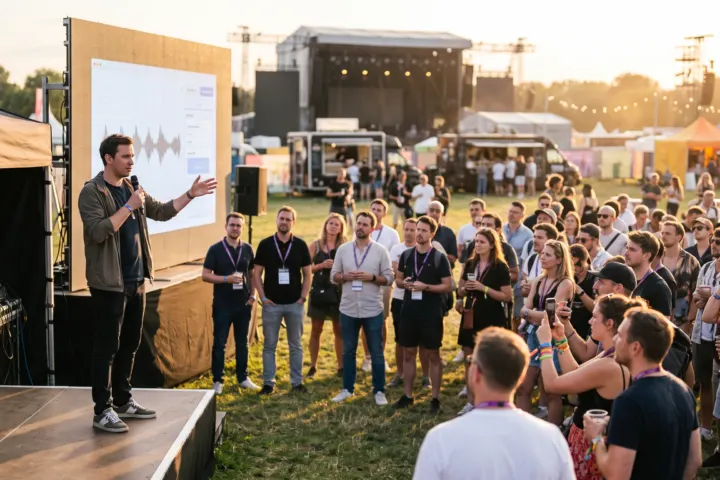
A recurring Sesamers theme: the alternative to a 180,000-person festival is not staying home, it is a 60-person room where a third of the attendees are relevant to you. In Paris those rooms cluster in a few recognisable formats:
- Station F events. Demo days, programme showcases and public talks – many open to outsiders who register. Useful less for the content than for the concentration: the campus aggregates founders, corporate innovation teams and visiting investors in one postcode.
- Sector meetups. Paris sustains regular communities across AI, SaaS, fintech, deeptech, climate and more – names and organisers rotate too fast to list reliably, so check current listings rather than trusting any static guide (including this one). The test is always the same: who actually attends, not what the page promises.
- Investor-hosted formats. Fund breakfasts, office hours and portfolio events – mostly invite-only, which is precisely the point. These are earned through warm intros and prior conversations; the public events above are where those get started.
- Corporate innovation events. France’s large corporates – banks, luxury, energy, transport – run active startup programmes with their own event calendars. If you sell B2B in those verticals, these rooms convert better than any startup-scene gathering.
Visitor vs local: two different games
As a visitor, concentrate rather than spread. Fly in for a flagship week – June above all – and build a meeting schedule before arriving; Paris during VivaTech week functions like a temporary global tech capital and rewards preparation over serendipity. One well-planned week beats four casual visits.
As a local (or someone committing to the market), invert the strategy: deprioritise the spectacle and invest in recurrence. Showing up monthly to the same two or three sector meetups compounds in a way one-off attendance never does – the French ecosystem in particular runs on familiarity and repeated presence. Pick few rooms, attend consistently, and let the network effects work.
French specifics worth knowing
Language: the startup scene’s flagship events run substantially in English, and the international layer of the ecosystem is fully anglophone. But drop one level down – local meetups, corporate innovation days, anything in the regions – and French reappears fast. You can operate in English; you will build trust faster with even mediocre French, and a bilingual colleague meaningfully widens which rooms are worth entering.
The corporate layer: France’s defining structural feature is how deeply large corporates are embedded in the startup scene – as VivaTech exhibitors, Station F programme sponsors, challenge organisers and, importantly, as buyers. B2B startups that learn to work this layer – patiently, since French enterprise sales cycles are not famous for speed – find a market their London competitors often ignore. And the public dimension matters: state-linked institutions and public funding are visible presences in the ecosystem, which shapes which events exist and who attends them.
Upcoming events
Dates and editions move constantly – the live, maintained list is here:
FAQ
What is the biggest startup event in Paris?
VivaTech, held each June – 180,000 visitors and 3,600+ investors at the June 2025 edition. It is corporate-heavy by design, which makes it strongest for enterprise sales and partnerships; the week’s side events are where much of the founder-investor activity actually happens.
Do I need to speak French to attend startup events in Paris?
Not for the flagships and the international layer, which run largely in English. Local meetups and corporate events shift towards French. English works; French accelerates trust – and opens rooms that anglophone-only visitors never see.
When is the best time to visit Paris for tech events?
June, during VivaTech week, when the whole ecosystem plus international visitors are in town – or the September-November rentrée season for smaller, more workable events. Avoid August entirely; the city’s professional life genuinely pauses.
Is Station F open to non-residents?
Parts of it. Many Station F talks, demo days and programme events accept outside registrations, and the campus hosts public-facing events year-round – check each event’s own registration terms rather than assuming access to the campus itself.
Keep going
How to choose which Paris rooms deserve your time – and how to score them afterwards – is the subject of our pillar on startup events. For the June flagship, the VivaTech guide goes deep, and conference side events covers working the orbit around any big show. If AI is your sector, AI events in Europe maps that calendar – and for how Paris compares with other European hubs, start with our ecosystems hub.